아연 그림
2 동료 심사 연구의 그림
전체
생강
아연
이눌린
커큐민
락타아제
베르베린
차전자피
비피도박테리움 롱검
비피도박테리움 락티스
비피도박테리움 비피덤
사카로마이세스 보울라디
락토바실루스 가세리
락토바실루스 플란타룸
락토바실루스 애시도필루스
부티레이트(나트륨/칼슘 부티레이트)
페퍼민트 오일
바실루스 코아굴란스
췌장효소(판크렐리파아제)
알로에 베라(내엽 젤)
알파-갈락토시다아제
소 초유
오메가-3 지방산(EPA/DHA)
비타민 A
비타민 D
프럭토올리고당(FOS)
갈락토올리고당(GOS)
L-글루타민
중쇄중성지방(MCT 오일)
N-아세틸시스테인(NAC)
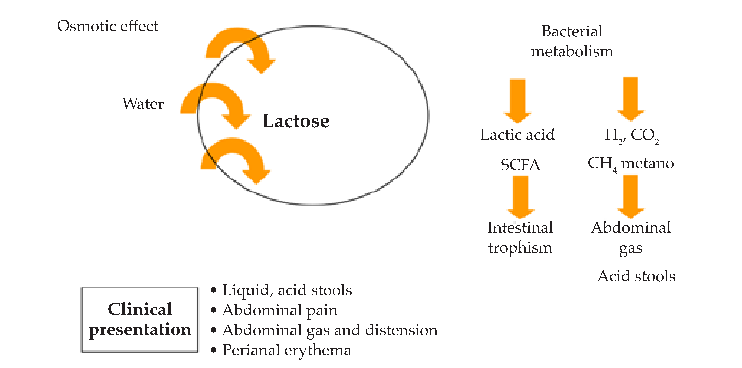
Figure 1
Diagram
Pathophysiology of lactose intolerance illustrating how undigested lactose causes symptoms through osmotic effects in the intestinal lumen and bacterial fermentation producing hydrogen, carbon dioxide, and methane gases.
Lactose intolerance: myths and facts. An update.
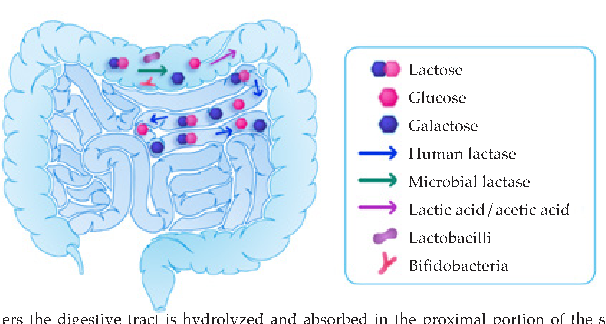
Figure 2
Diagram
Diagnostic algorithm or classification scheme for lactose intolerance, distinguishing between primary (genetic), secondary (disease-related), and congenital forms of lactase deficiency.
Lactose intolerance: myths and facts. An update.