Peppermint Oil Figure
2 figure da ricerca revisionata da esperti
Tutti
Saccharomyces boulardii
Lactobacillus acidophilus
Bifidobacterium lactis
Lactobacillus plantarum
Bifidobacterium longum
Bifidobacterium bifidum
Lactobacillus gasseri
Bacillus coagulans
Inulin
Fructooligosaccharides (FOS)
Galactooligosaccharides (GOS)
Psyllium Husk
Lactase
Pancreatic Enzymes (Pancrelipase)
Alpha-Galactosidase
L-Glutamine
N-Acetyl Cysteine (NAC)
Peppermint Oil
Ginger
Berberine
Curcumin
Zinc
Vitamin D
Vitamin A
Butyrate (Sodium/Calcium Butyrate)
Omega-3 Fatty Acids (EPA/DHA)
Medium-Chain Triglycerides (MCT Oil)
Bovine Colostrum
Aloe Vera (Inner Leaf Gel)

Figure 5
Chart
Polyethylene glycol 3350 is evaluated for IBS with constipation based on two RCTs totaling 181 patients. Evidence supports its use for improving stool consistency, though effects on abdominal pain are less consistent.
Canadian Association of Gastroenterology Clinical Practice Guideline for the Management of Irritable …
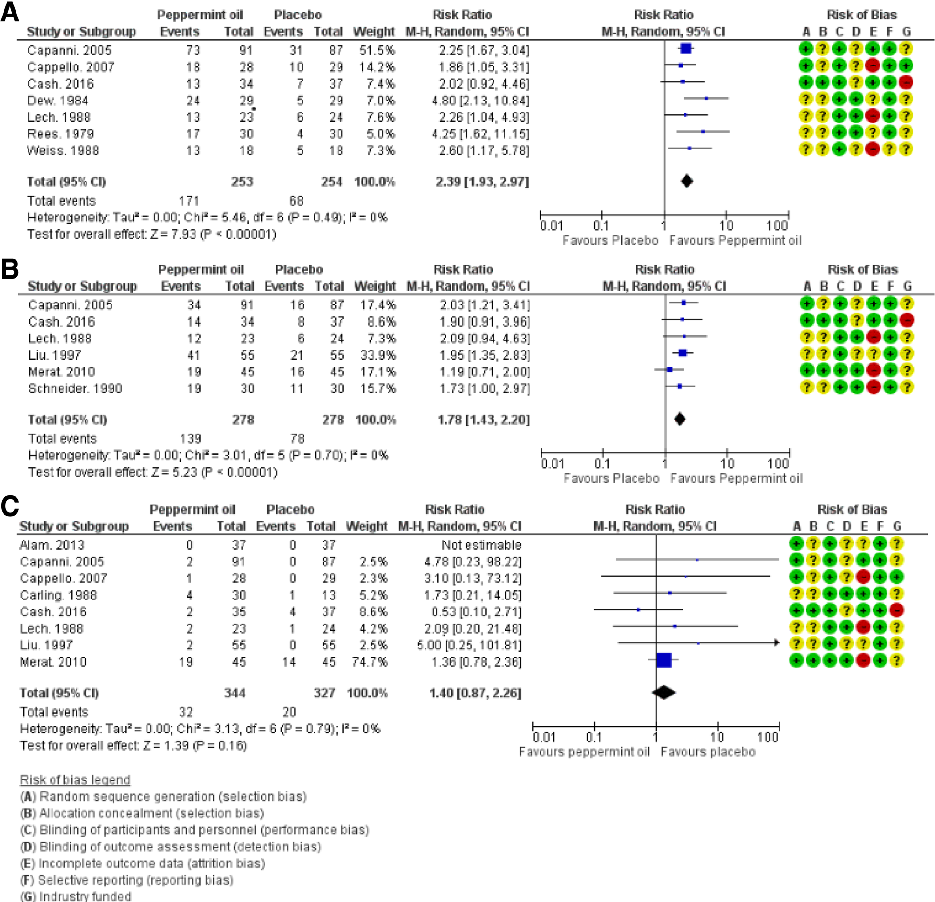
Figure 9
Chart
Sensitivity analyses excluding high-risk-of-bias studies confirm the robustness of the treatment effect. The benefit of peppermint oil persists regardless of IBS subtype or study quality.
The impact of peppermint oil on the irritable bowel syndrome: a meta-analysis …