GutCited

Vitamin D चित्र

5 सहकर्मी-समीक्षित शोध से आंकड़े
सभी Saccharomyces boulardii Lactobacillus acidophilus Bifidobacterium lactis Lactobacillus plantarum Bifidobacterium longum Bifidobacterium bifidum Lactobacillus gasseri Bacillus coagulans Inulin Fructooligosaccharides (FOS) Galactooligosaccharides (GOS) Psyllium Husk Lactase Pancreatic Enzymes (Pancrelipase) Alpha-Galactosidase L-Glutamine N-Acetyl Cysteine (NAC) Peppermint Oil Ginger Berberine Curcumin Zinc Vitamin D Vitamin A Butyrate (Sodium/Calcium Butyrate) Omega-3 Fatty Acids (EPA/DHA) Medium-Chain Triglycerides (MCT Oil) Bovine Colostrum Aloe Vera (Inner Leaf Gel)
All Types Chart Diagram Photograph Flowchart Forest Plot Micrograph Other
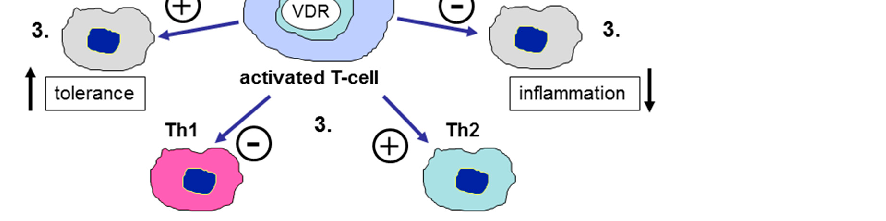
Figure 1. Vitamin D and barrier function in the gastrointestinal tract. Schematic representation of the expression of the vitamin D receptor (VDR) and vitamin D-activating enzyme (CYP27B1) in human colonic epithelial cells, antigen presenting cells such a
Figure 6 Diagram

Vitamin D receptor expression and vitamin D-activating enzyme CYP27B1 are present in human colonic epithelial cells, enabling local production of active calcitriol. This paracrine signaling enhances tight junction integrity and antimicrobial defense at the mucosal surface.

The Role of Vitamin D in Inflammatory Bowel Disease: Mechanism to Management.
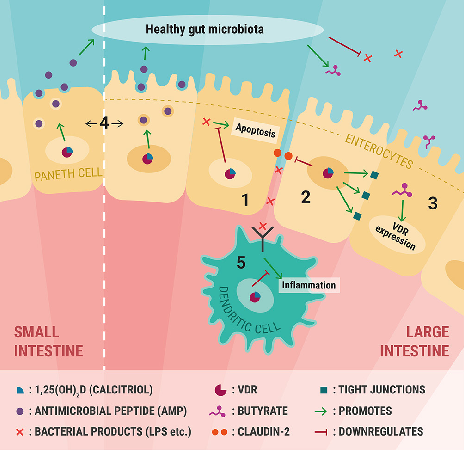
Figure 1 Epithelial mechanisms of vitamin D: (1) increased VDR activity is shown to repress NF-κB-dependent epithelial apoptosis pathways in experimental colitis. (2) Claudin-2 (CL-2), a paracellular cation channel involved in barrier formation, seems to
Figure 1 Diagram

Epithelial mechanisms of vitamin D in IBD, illustrating VDR-mediated NF-kB suppression, claudin-2 regulation at the paracellular barrier, and other pathways through which vitamin D influences intestinal inflammation.

Managing vitamin D deficiency in inflammatory bowel disease.
Vitamin D is increasingly viewed as an immune modulator capable of directly impacting both innate and adaptive immune responses (Figure 2). Given that almost all immune cells express VDR,2 it is not surprising that vitamin D is closely correlated with imm
Figure 1 Diagram

Vitamin D's multifaceted role as an immune modulator is discussed, noting that nearly all immune cells express the vitamin D receptor and that deficiency is closely correlated with increased susceptibility to immune-mediated diseases.

The Role of Vitamin D in Immune System and Inflammatory Bowel Disease.
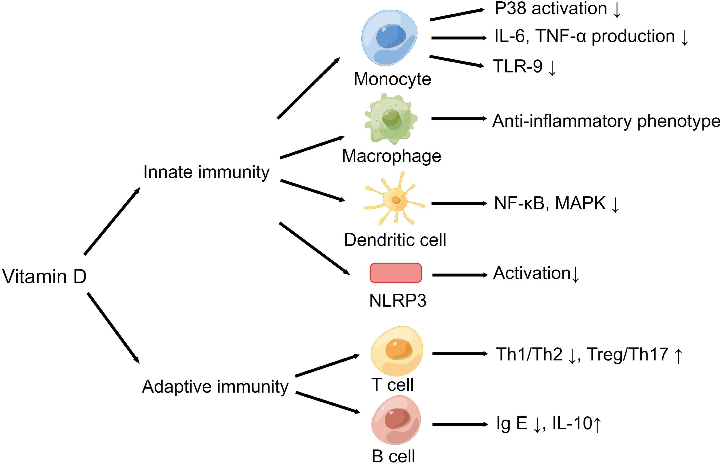
Figure 2 Vitamin D impacts the innate and adaptive immunity (By Figdraw (www.figdraw.com)). Notes: In innate immunity, vitamin D inhibit LPS-induced p38 activation and IL-6 and TNF-α production by monocytes, and downregulate TLR-9 expression after stimula
Figure 2 Diagram

Vitamin D impacts on innate and adaptive immunity are illustrated, showing inhibition of LPS-induced p38 activation, suppression of IL-6 and TNF-alpha by monocytes, and downregulation of TLR-9 expression in immune cells.

The Role of Vitamin D in Immune System and Inflammatory Bowel Disease.
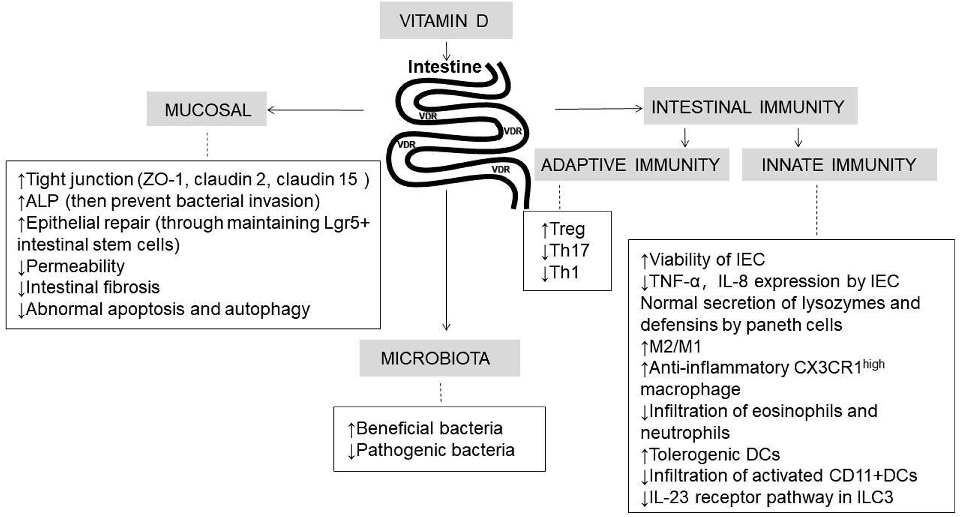
Figure 3 Vitamin D influence the development of IBD by directly impacting intestinal immunity, microbiota and the intestinal mucosal barrier. Notes: “↑” = increase/up-regulated; “↓” = decrease/down-regulated. Abbreviations: VDR, vitamin D receptor; ZO-1,
Figure 3 Diagram

Vitamin D's influence on inflammatory bowel disease development is depicted through three interconnected pathways: intestinal immune regulation, microbiota composition, and mucosal barrier integrity.

The Role of Vitamin D in Immune System and Inflammatory Bowel Disease.