GutCited

Omega-3 Fatty Acids (EPA/DHA) 图表

3 来自同行评审研究的图表
全部 Psyllium Husk Bifidobacterium lactis Fructooligosaccharides (FOS) Lactobacillus plantarum Peppermint Oil Pancreatic Enzymes (Pancrelipase) Curcumin Vitamin A Medium-Chain Triglycerides (MCT Oil) Galactooligosaccharides (GOS) Lactobacillus gasseri Aloe Vera (Inner Leaf Gel) Alpha-Galactosidase Vitamin D L-Glutamine Inulin Ginger Lactase Berberine Omega-3 Fatty Acids (EPA/DHA) Bovine Colostrum Zinc Bifidobacterium bifidum Butyrate (Sodium/Calcium Butyrate) Bacillus coagulans Saccharomyces boulardii Lactobacillus acidophilus N-Acetyl Cysteine (NAC) Bifidobacterium longum
All Types Chart Diagram Photograph Flowchart Forest Plot Micrograph Other
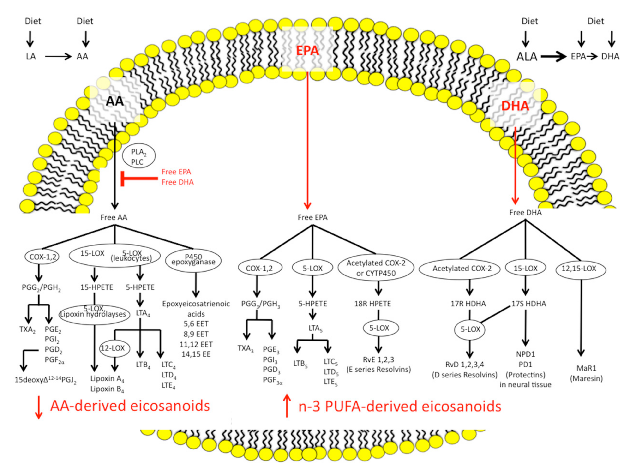
Figure 1. Outline of the pathways of synthesis for the n-3 and n-6 polyunsaturated fatty acids eicosanoids and the specialised pro-resolving mediators. AA, arachidonic acid; ALA, α-linolenic acid; COX, cyclooxygenase; CYTP450, cytochrome P450 enzymes; DHA
Figure 5 Diagram

N-3 and n-6 polyunsaturated fatty acids follow distinct biosynthetic pathways to produce eicosanoids and specialized pro-resolving mediators. This diagram outlines the synthesis routes from alpha-linolenic acid and arachidonic acid through COX and cytochrome P450 enzymes to their bioactive lipid products.

The Imbalance between n-6/n-3 Polyunsaturated Fatty Acids and Inflammatory Bowel Disease: A …
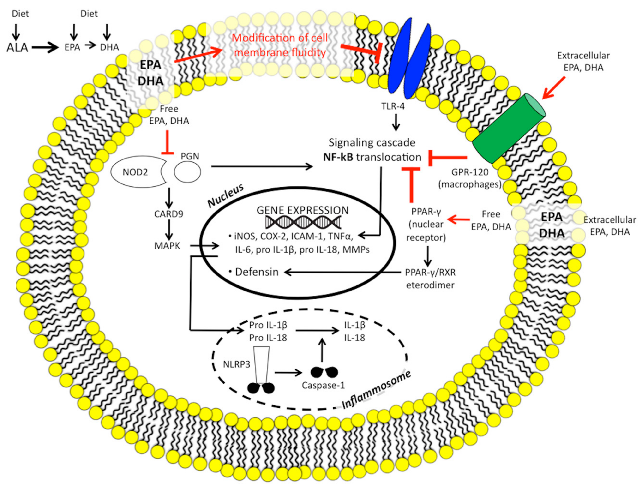
Figure 2. The n-3 polyunsaturated fatty acid targets of intestinal innate immunity. ALA, α-linolenic acid; CARD, caspase recognition domain; COX, cyclooxygenase; DHA, docosahexaenoic acid; EPA, eicosapentaenoic acid; GPR, G-protein coupled receptor; ICAM,
Figure 6 Diagram

N-3 polyunsaturated fatty acids modulate intestinal innate immunity through multiple receptor and signaling targets. This diagram maps the interactions of DHA and EPA with G-protein coupled receptors, COX enzymes, and caspase recognition domains in intestinal immune cells.

The Imbalance between n-6/n-3 Polyunsaturated Fatty Acids and Inflammatory Bowel Disease: A …
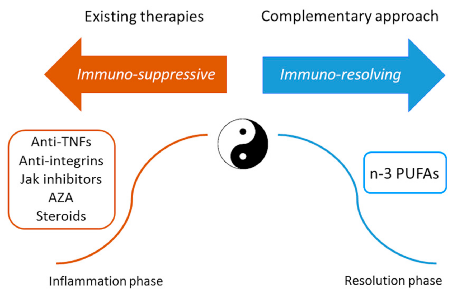
Figure 3. The immuno-suppressive and immuno-resolving approaches of inflammatory bowel disease treatment. AZA, azathioprine; PUFA, polyunsaturated fatty acid; TNF, tumour necrosis factor.
Figure 7 Diagram

Current IBD treatments employ both immuno-suppressive and immuno-resolving strategies. This diagram contrasts conventional therapies (azathioprine, anti-TNF agents) with emerging PUFA-based approaches that promote active resolution of intestinal inflammation.

The Imbalance between n-6/n-3 Polyunsaturated Fatty Acids and Inflammatory Bowel Disease: A …