Galactooligosaccharides (GOS) Hình ảnh
1 hình ảnh từ nghiên cứu có bình duyệt
Tất cả
Saccharomyces boulardii
Lactobacillus acidophilus
Bifidobacterium lactis
Lactobacillus plantarum
Bifidobacterium longum
Bifidobacterium bifidum
Lactobacillus gasseri
Bacillus coagulans
Inulin
Fructooligosaccharides (FOS)
Galactooligosaccharides (GOS)
Psyllium Husk
Lactase
Pancreatic Enzymes (Pancrelipase)
Alpha-Galactosidase
L-Glutamine
N-Acetyl Cysteine (NAC)
Peppermint Oil
Ginger
Berberine
Curcumin
Zinc
Vitamin D
Vitamin A
Butyrate (Sodium/Calcium Butyrate)
Omega-3 Fatty Acids (EPA/DHA)
Medium-Chain Triglycerides (MCT Oil)
Bovine Colostrum
Aloe Vera (Inner Leaf Gel)
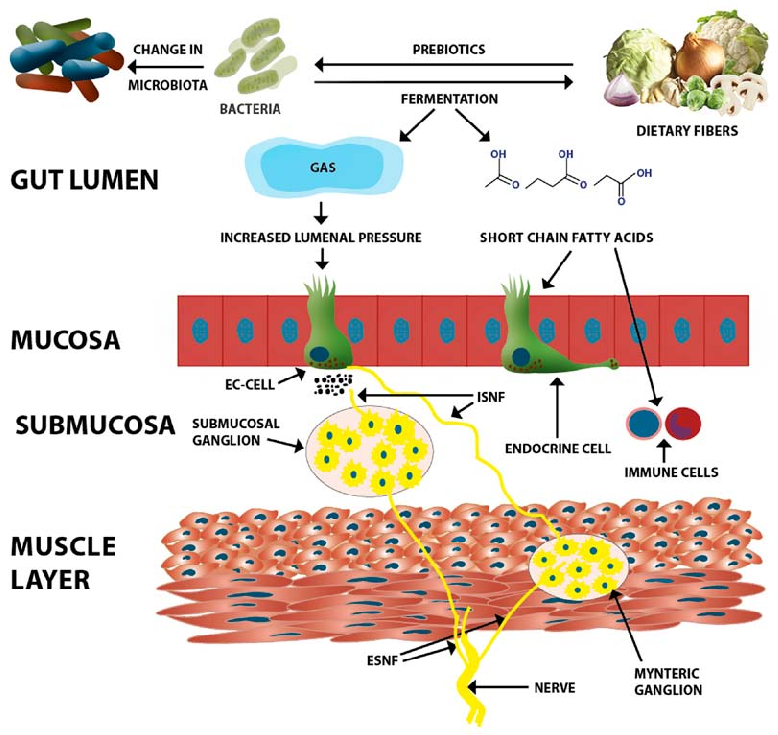
Figure 3
Diagram
Dietary fiber acts as a prebiotic for intestinal microbiota, promoting growth of beneficial bacteria and production of short-chain fatty acids. This diagram illustrates multiple mechanisms through which fiber affects gastrointestinal function, including modulation of gut microbiome composition and intestinal barrier integrity.
Dietary fiber in irritable bowel syndrome (Review).