Mô tả
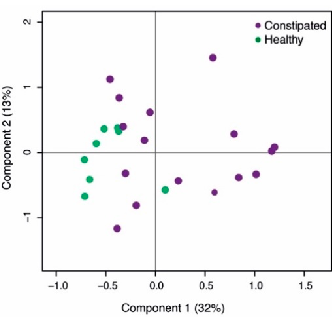
Principal coordinate analysis of baseline microbial communities reveals separation between constipated patients and healthy controls, indicating distinct microbiome configurations associated with chronic constipation.
More Figures from This Paper
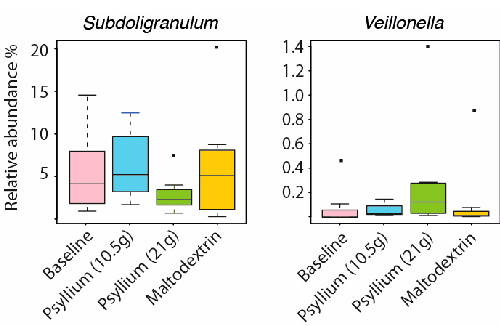
Figure 6
Psyllium supplementation alters the intestinal microbiota of healthy adults, with specific increases in Faecalibacterium and other fiber-fermenting taxa. These changes are consistent with enhanced saccharolytic fermentation.
chart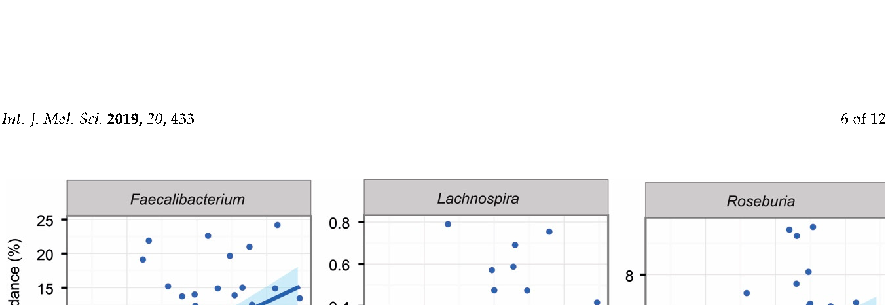
Figure 7
Microbial taxa changes in constipated patients following psyllium supplementation show distinct patterns compared to healthy volunteers. Certain Lachnospiraceae and Ruminococcaceae members increase selectively.
chart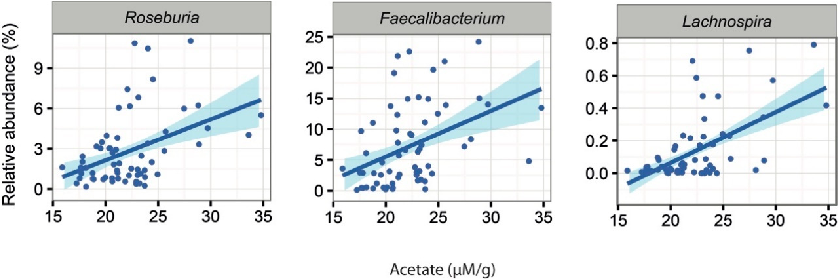
Figure 8
Significant associations between fecal acetate concentrations and specific microbial taxa are identified in constipated patients. Higher Lachnospira and Roseburia abundance correlates with increased acetate production.
chartFigure 5
ChartSource Paper
The Effect of Psyllium Husk on Intestinal Microbiota in Constipated Patients and Healthy Controls.Cite This Figure
 > Source: Jonna Jalanka et al. "The Effect of Psyllium Husk on Intestinal Microbiota in Constipated Patients and." *International journal of molecular sciences*, 2019. PMID: [30669509](https://pubmed.ncbi.nlm.nih.gov/30669509/)
<figure>
  <img src="https://pdfs.citedhealth.com/figures/30669509/103.png" alt="Principal coordinate analysis of baseline microbial communities reveals separation between constipated patients and healthy controls, indicating distinct microbiome configurations associated with chronic constipation." />
  <figcaption>Figure 5. Principal coordinate analysis of baseline microbial communities reveals separation between constipated patients and healthy controls, indicating distinct microbiome configurations associated with chronic constipation.<br>  Source: Jonna Jalanka et al. "The Effect of Psyllium Husk on Intestinal Microbiota in Constipated Patients and." <em>International journal of molecular sciences</em>, 2019. PMID: <a href="https://pubmed.ncbi.nlm.nih.gov/30669509/">30669509</a></figcaption>
</figure>