Descrizione
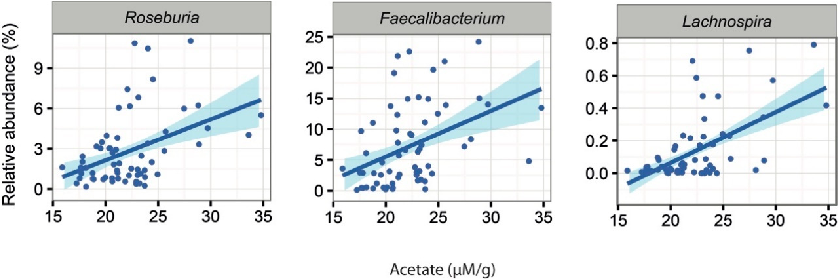
Significant associations between fecal acetate concentrations and specific microbial taxa are identified in constipated patients. Higher Lachnospira and Roseburia abundance correlates with increased acetate production.
More Figures from This Paper
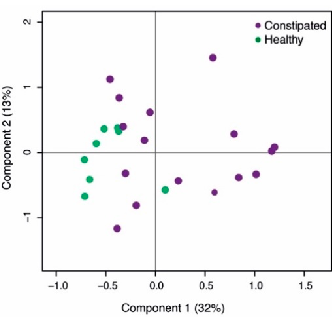
Figure 5
Principal coordinate analysis of baseline microbial communities reveals separation between constipated patients and healthy controls, indicating distinct microbiome configurations associated with chronic constipation.
chart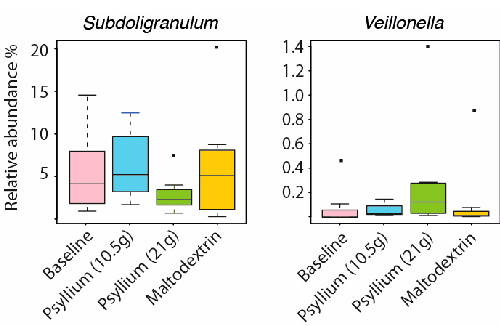
Figure 6
Psyllium supplementation alters the intestinal microbiota of healthy adults, with specific increases in Faecalibacterium and other fiber-fermenting taxa. These changes are consistent with enhanced saccharolytic fermentation.
chart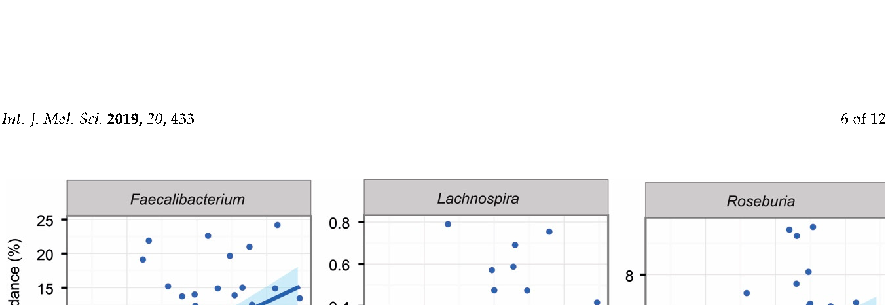
Figure 7
Microbial taxa changes in constipated patients following psyllium supplementation show distinct patterns compared to healthy volunteers. Certain Lachnospiraceae and Ruminococcaceae members increase selectively.
chartFigure 8
ChartSource Paper
The Effect of Psyllium Husk on Intestinal Microbiota in Constipated Patients and Healthy Controls.Cite This Figure
 > Source: Jonna Jalanka et al. "The Effect of Psyllium Husk on Intestinal Microbiota in Constipated Patients and." *International journal of molecular sciences*, 2019. PMID: [30669509](https://pubmed.ncbi.nlm.nih.gov/30669509/)
<figure>
  <img src="https://pdfs.citedhealth.com/figures/30669509/190.png" alt="Significant associations between fecal acetate concentrations and specific microbial taxa are identified in constipated patients. Higher Lachnospira and Roseburia abundance correlates with increased acetate production." />
  <figcaption>Figure 8. Significant associations between fecal acetate concentrations and specific microbial taxa are identified in constipated patients. Higher Lachnospira and Roseburia abundance correlates with increased acetate production.<br>  Source: Jonna Jalanka et al. "The Effect of Psyllium Husk on Intestinal Microbiota in Constipated Patients and." <em>International journal of molecular sciences</em>, 2019. PMID: <a href="https://pubmed.ncbi.nlm.nih.gov/30669509/">30669509</a></figcaption>
</figure>