Descrizione
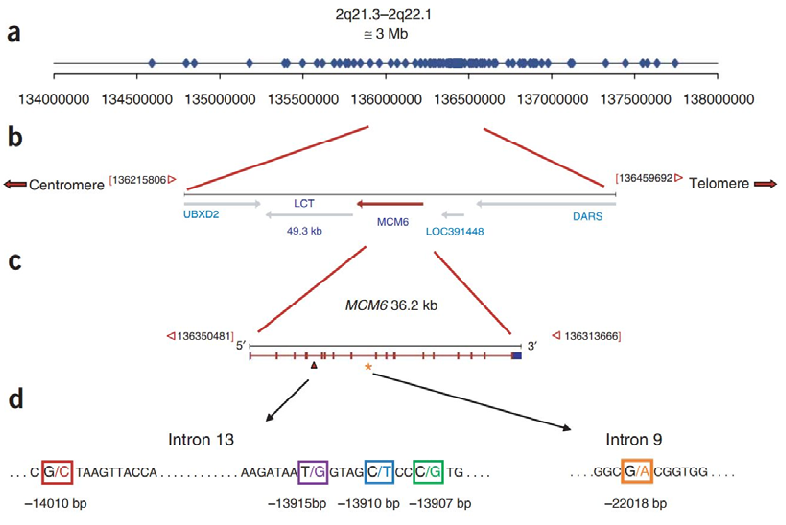
Genetic map of the lactase (LCT) and MCM6 gene region displays the locations of key single nucleotide polymorphisms associated with lactase persistence and non-persistence phenotypes across populations.
More Figures from This Paper
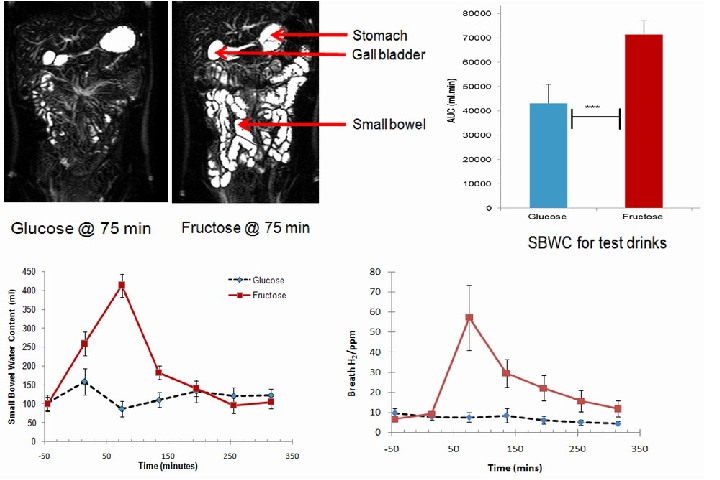
Figure 2
Small bowel water content and breath hydrogen concentrations after consuming glucose and fructose drinks are plotted over time, providing reference data for comparison with lactose challenge tests.
chart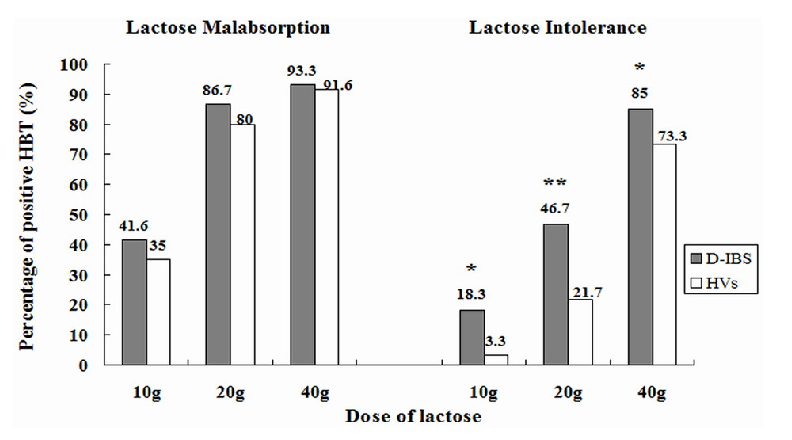
Figure 3
Prevalence of lactose malabsorption versus symptomatic lactose intolerance in IBS-D patients is compared, demonstrating that malabsorption does not invariably produce clinical symptoms.
chart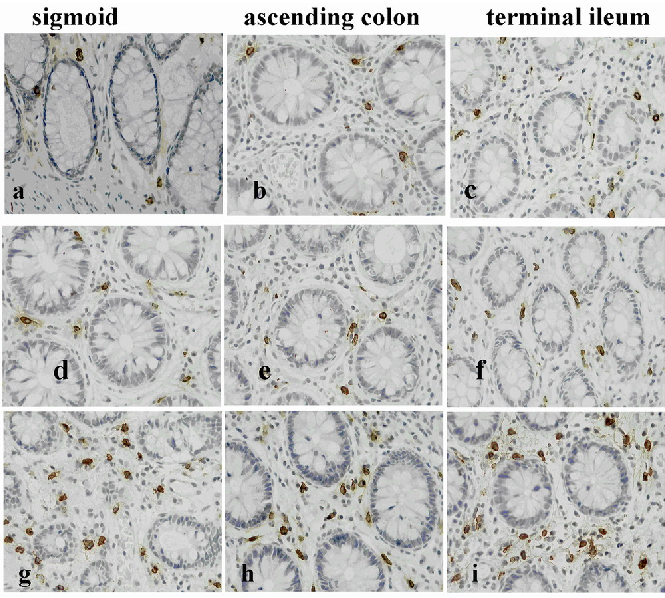
Figure 4
Representative photomicrographs of tryptase-positive mast cells in colonic mucosa compare healthy controls with IBS-D patients, suggesting mast cell involvement in lactose intolerance symptomatology.
micrograph
Figure 5
Dietary management strategies for lactose intolerance are summarized, including enzyme supplementation, dairy product selection, and gradual tolerance-building approaches.
diagramFigure 1
DiagramSource Paper
Lactose Intolerance in Adults: Biological Mechanism and Dietary Management.Cite This Figure
 > Source: Yanyong Deng et al. "Lactose Intolerance in Adults: Biological Mechanism and Dietary Management.." *Nutrients*, 2015. PMID: [26393648](https://pubmed.ncbi.nlm.nih.gov/26393648/)
<figure>
  <img src="https://pdfs.citedhealth.com/figures/26393648/61.png" alt="Genetic map of the lactase (LCT) and MCM6 gene region displays the locations of key single nucleotide polymorphisms associated with lactase persistence and non-persistence phenotypes across populations." />
  <figcaption>Figure 1. Genetic map of the lactase (LCT) and MCM6 gene region displays the locations of key single nucleotide polymorphisms associated with lactase persistence and non-persistence phenotypes across populations.<br>  Source: Yanyong Deng et al. "Lactose Intolerance in Adults: Biological Mechanism and Dietary Management.." <em>Nutrients</em>, 2015. PMID: <a href="https://pubmed.ncbi.nlm.nih.gov/26393648/">26393648</a></figcaption>
</figure>