Description
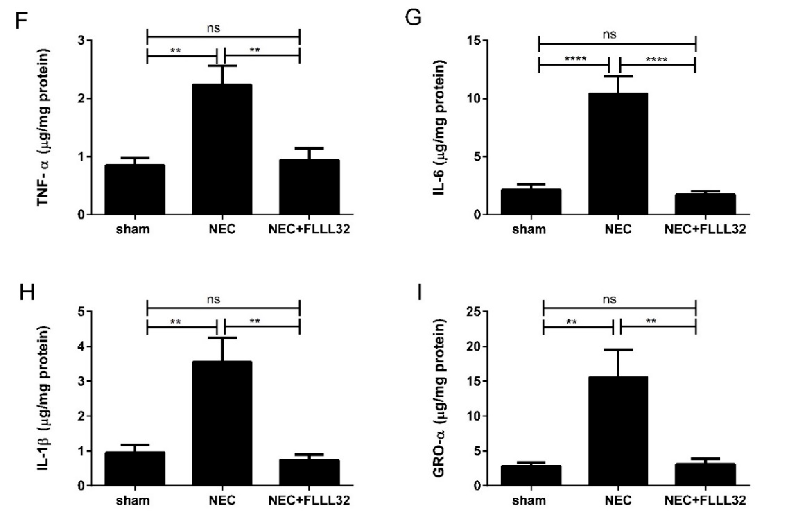
Animal models of necrotizing enterocolitis and colitis respond favorably to curcumin treatment. This figure presents in vivo data on curcumin's protective effects in experimental intestinal inflammation.
More Figures from This Paper
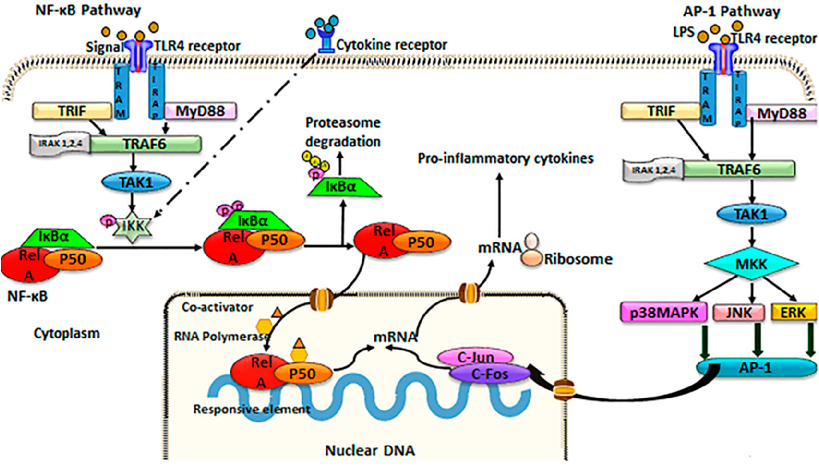
Figure 5
TLR4/NF-kB/AP-1 signaling is a key inflammatory pathway in intestinal disease. This schematic illustrates the cascade from TLR4 receptor activation through NF-kB and AP-1 transcription factors to pro-inflammatory gene expression, and indicates where curcumin may intervene.
diagram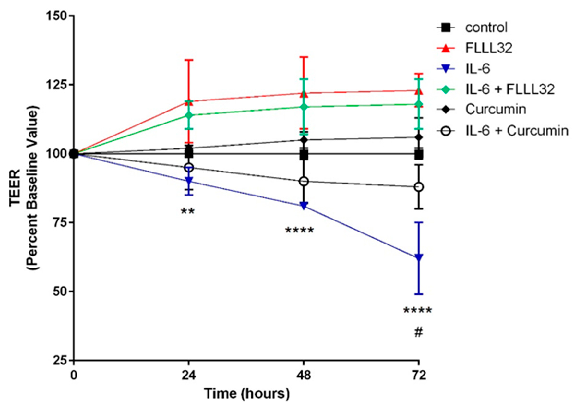
Figure 6
FLLL32 (a curcumin analogue) and curcumin both protect against IL-6-induced reduction of transepithelial electrical resistance (TEER) in T84 cell monolayers. This graph shows that curcumin preserves intestinal barrier integrity by counteracting cytokine-mediated tight junction disruption over 72 hours.
chart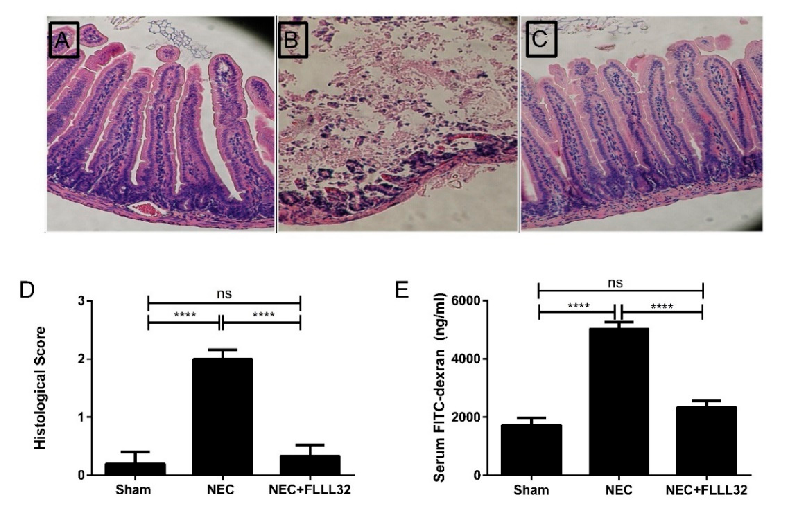
Figure 7
Curcumin's effects on intestinal tight junction proteins have been demonstrated in multiple experimental models. This figure presents protein expression or immunofluorescence data showing curcumin-mediated preservation of barrier function.
chartFigure 8
ChartSource Paper
Curcumin and Intestinal Inflammatory Diseases: Molecular Mechanisms of Protection.Cite This Figure
 > Source: Kathryn Burge et al. "Curcumin and Intestinal Inflammatory Diseases: Molecular Mechanisms of Protectio." *International journal of molecular sciences*, 2019. PMID: [31003422](https://pubmed.ncbi.nlm.nih.gov/31003422/)
<figure>
  <img src="https://pdfs.citedhealth.com/figures/31003422/188.png" alt="Animal models of necrotizing enterocolitis and colitis respond favorably to curcumin treatment. This figure presents in vivo data on curcumin's protective effects in experimental intestinal inflammation." />
  <figcaption>Figure 8. Animal models of necrotizing enterocolitis and colitis respond favorably to curcumin treatment. This figure presents in vivo data on curcumin's protective effects in experimental intestinal inflammation.<br>  Source: Kathryn Burge et al. "Curcumin and Intestinal Inflammatory Diseases: Molecular Mechanisms of Protectio." <em>International journal of molecular sciences</em>, 2019. PMID: <a href="https://pubmed.ncbi.nlm.nih.gov/31003422/">31003422</a></figcaption>
</figure>