Beschreibung
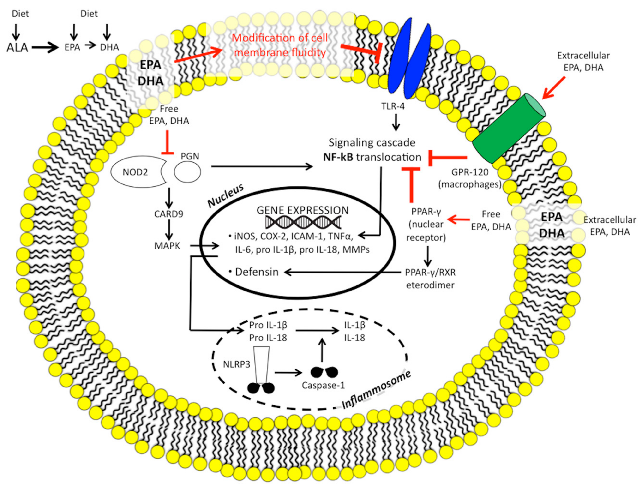
N-3 polyunsaturated fatty acids modulate intestinal innate immunity through multiple receptor and signaling targets. This diagram maps the interactions of DHA and EPA with G-protein coupled receptors, COX enzymes, and caspase recognition domains in intestinal immune cells.
More Figures from This Paper
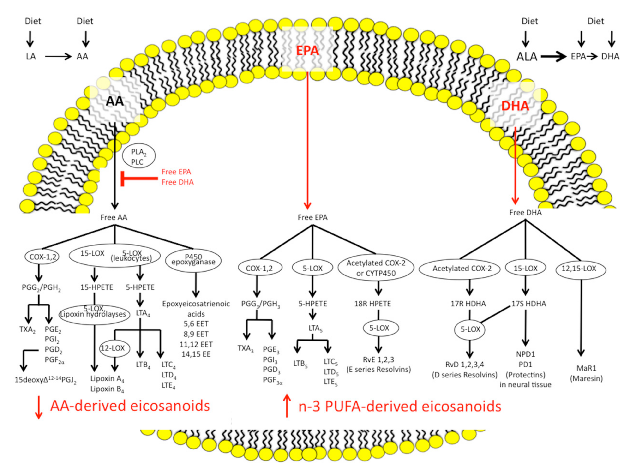
Figure 5
N-3 and n-6 polyunsaturated fatty acids follow distinct biosynthetic pathways to produce eicosanoids and specialized pro-resolving mediators. This diagram outlines the synthesis routes from alpha-linolenic acid and arachidonic acid through COX and cytochrome P450 enzymes to their bioactive lipid products.
diagram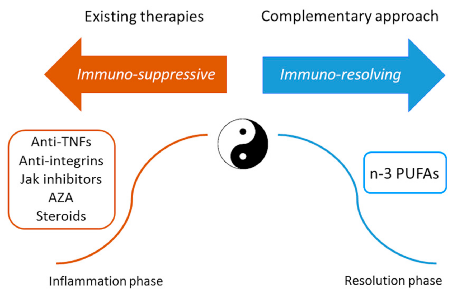
Figure 7
Current IBD treatments employ both immuno-suppressive and immuno-resolving strategies. This diagram contrasts conventional therapies (azathioprine, anti-TNF agents) with emerging PUFA-based approaches that promote active resolution of intestinal inflammation.
diagramFigure 6
DiagramSource Paper
The Imbalance between n-6/n-3 Polyunsaturated Fatty Acids and Inflammatory Bowel Disease: A Comprehensive Review and Future Therapeutic Perspectives.Cite This Figure
 > Source: Eleonora Scaioli et al. "The Imbalance between n-6/n-3 Polyunsaturated Fatty Acids and Inflammatory Bowel." *International journal of molecular sciences*, 2017. PMID: [29206211](https://pubmed.ncbi.nlm.nih.gov/29206211/)
<figure>
  <img src="https://pdfs.citedhealth.com/figures/29206211/182.png" alt="N-3 polyunsaturated fatty acids modulate intestinal innate immunity through multiple receptor and signaling targets. This diagram maps the interactions of DHA and EPA with G-protein coupled receptors, COX enzymes, and caspase recognition domains in intestinal immune cells." />
  <figcaption>Figure 6. N-3 polyunsaturated fatty acids modulate intestinal innate immunity through multiple receptor and signaling targets. This diagram maps the interactions of DHA and EPA with G-protein coupled receptors, COX enzymes, and caspase recognition domains in intestinal immune cells.<br>  Source: Eleonora Scaioli et al. "The Imbalance between n-6/n-3 Polyunsaturated Fatty Acids and Inflammatory Bowel." <em>International journal of molecular sciences</em>, 2017. PMID: <a href="https://pubmed.ncbi.nlm.nih.gov/29206211/">29206211</a></figcaption>
</figure>